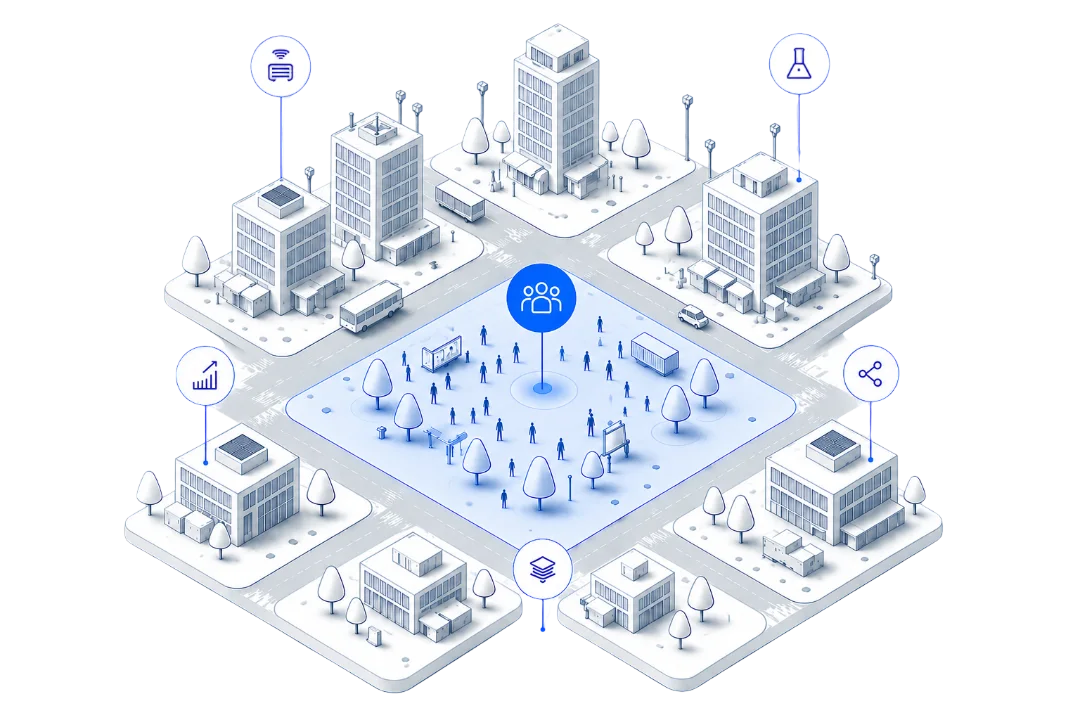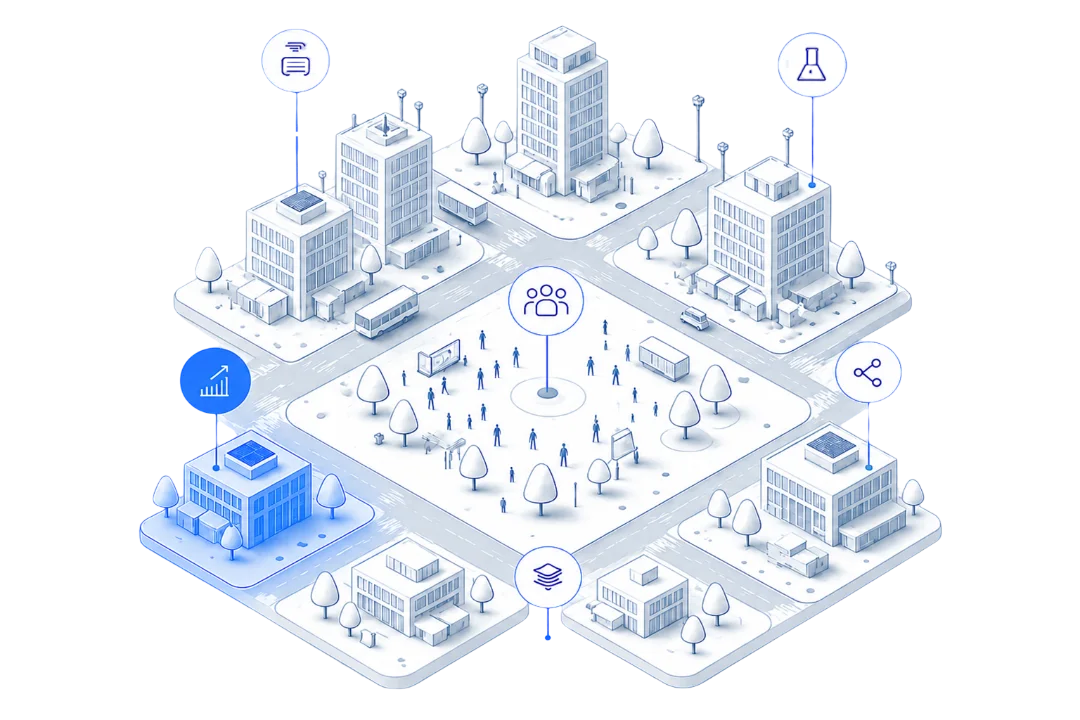


Urban digital twins are becoming an increasingly practical instrument for governments that need to make complex decisions with clearer evidence. Their value does not come from a single 3D model, but from an ecosystem that connects reliable data, policy questions, operational teams and citizens.
From visual model to decision infrastructure
A useful city twin combines physical context with live and historical information. It allows planners to compare scenarios, understand dependencies and communicate the possible consequences of an intervention before public resources are committed.
The strongest digital twin is not the most visually impressive one. It is the one that helps a city make a better, faster and more transparent decision.
Core capabilities cities should build first
- Shared data standards that allow systems and institutions to exchange information safely.
- Clear governance for ownership, privacy, quality, access and long-term maintenance.
- Scenario tools designed around real planning and operational questions.
- Interdisciplinary teams connecting technology, policy, infrastructure and community insight.

A phased implementation approach
Cities do not need to model everything at once. A focused pilot can establish the governance and technical foundations while producing value around a defined challenge.
- Define the decision. Begin with a question that city teams must answer.
- Map the required data. Identify availability, quality, ownership and gaps.
- Build a minimum useful model. Create only the detail required for the first scenario.
- Validate with users. Test findings with operators, experts and affected communities.
- Scale through standards. Reuse components and governance patterns across new use cases.
Building trust into the ecosystem
Transparency should be designed into the platform from the beginning. People need to understand what information is used, how scenarios are produced and where uncertainty remains. This is especially important when models influence mobility, land use, energy or public safety decisions.